
Free Speech
Protecting all North Carolinians’ right to free speech and expression is at the heart of the ACLU of North Carolina’s mission. It is the foundation of a vibrant democracy, and without it, other fundamental rights, like the right to vote, would wither away.
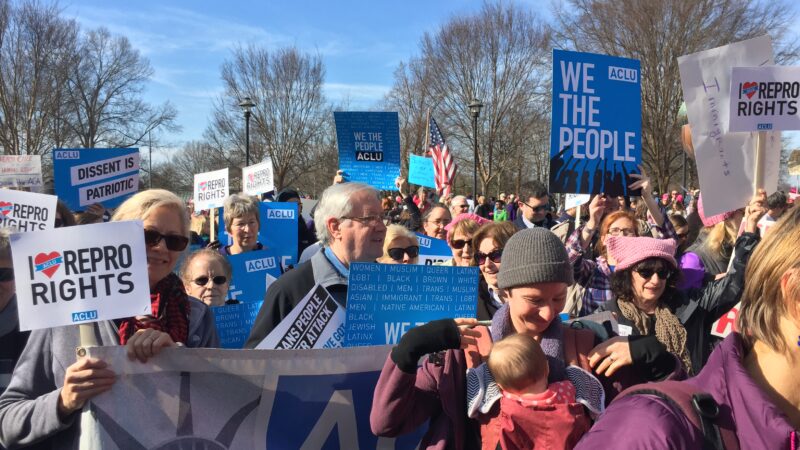
Freedom of speech, the press, association, assembly, and petition: This set of guarantees, protected by the First Amendment, comprises what we refer to as freedom of expression. It is the foundation of a vibrant democracy, and without it, other fundamental rights, like the right to vote, would wither away.
Protecting all North Carolinians’ right to free speech and expression is at the heart of the ACLU of North Carolina’s mission. In 1965, the organization was founded to aid University of North Carolina students in their protest against the Speaker Ban, a law that forbade so-called “radicals” from speaking at state universities. In 1968, a court delivered the ACLU of North Carolina one of our first victories when it ruled that the Speaker Ban violated North Carolinians’ free speech rights.
The ACLU-NC has continued to protect individuals’ right to free speech and expression, even when people’s opinions are controversial or unpopular. Since our founding, the ACLU-NC has defended the free speech rights of North Carolinians from across the spectrum — from civil rights activists to Ku Klux Klan members — in order to ensure that the First Amendment protects us all.
We also work to champion freedom of expression in its myriad forms—whether through protest, media, online speech, or the arts—in the face of new threats to free speech.
The Latest

Banned Books Week 2026: Pushing Back Against Escalating Censorship Attempts

Civil Rights Organizations File Appeal on Behalf of Durham Activist Silenced with No-Contact Order
Cases, Campaigns & Legislation
Asheville Blade v. City of Asheville
HB 636: Banning Books in Schools
SB 558: Eliminating “DEI” in Public Higher Education
Stay Informed
Sign up to be the first to hear about how to take action.
By completing this form, I agree to receive occasional emails per the terms of the ACLU’s privacy statement.
By completing this form, I agree to receive occasional emails per the terms of the ACLU’s privacy statement.